
Written by The Banking Post
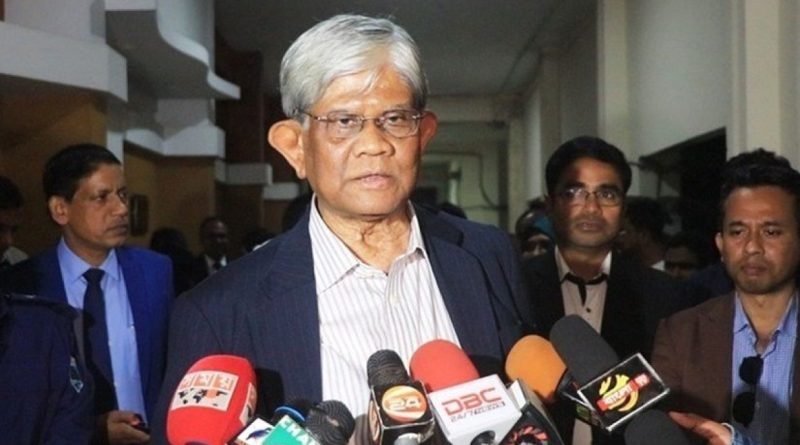
Finance Adviser Dr Salehuddin Ahmed on Monday warned that the next elected government will inherit far bigger economic challenges, even as the interim administration has worked to keep the economy relatively stable.
Speaking at Sonali Bank’s Annual Conference 2026 in Dhaka, he said recent reforms were not sufficient but would provide a base for the next government. “The interim government has tried to keep the economy relatively stable and has tackled many challenges. However, the challenges ahead are even bigger,” he said, adding that future policymakers would need to handle them with greater tact.
Urging professionalism within state-owned banks during an elected government’s tenure, the adviser cautioned that political pressure is inevitable. Rather than outright refusals, bankers should rely on negotiation and clear explanations of economic policy, banking laws and audit norms, he said. He also called for a stronger focus on small and medium enterprises, noting their critical role in job creation and warning that large corporate lending carries higher risks.
Bangladesh Bank Governor Dr Ahsan H Mansur said state-owned commercial banks have the capacity to lend but often fail to recover loans due to weaknesses in borrower selection. Proper assessment, he said, would keep the risk of loans turning non-performing to a minimum.
He pointed out that prolonged regulatory restrictions have made state-owned banks overly cautious, limiting loan flows and weakening recovery—an approach he described as an unsustainable business model. Mobilising deposits without effectively channeling them into the economy also reduces a bank’s overall contribution, he added.
While acknowledging Sonali Bank’s cautious lending stance, the governor said the time has come to expand credit more decisively. He highlighted missed opportunities in consumer lending and housing finance, sectors where state-owned banks have played only a marginal role despite strong potential.
Calling for Sonali Bank’s transformation into a fully commercial institution, he said it is still operating under a partially commercial framework. Greater autonomy, he added, would be granted to allow the bank to function under true commercial principles, a policy he hopes future governments will continue. He also urged stronger initiatives to boost remittance inflows and support exports to build foreign currency reserves.
Sonali Bank Chairman Mohammad Muslim Chowdhury echoed the call for autonomy, stressing that the board should have authority to appoint and remove the managing director to ensure sound corporate governance. “Hold the board accountable. Evaluate performance and make changes accordingly,” he said.
Managing Director Shawkat Ali Khan said the bank aims to cut its non-performing loan ratio to 10–12 percent this year and to single digits next year. Once the ratio reaches around 9 percent, the bank plans to expand export financing, he added.
Sonali Bank, the country’s largest lender with 1,234 branches including two overseas outlets, posted an operating profit of Tk 80.17 billion in 2025, up Tk 23.22 billion from the previous year. Deposits rose by Tk 150 billion to Tk 1.79 trillion, while outstanding loans increased by Tk 55.0 billion year-on-year to Tk 1.05 trillion.
Senior government officials also attended the conference, underscoring the emphasis on banking reform as Bangladesh prepares for a more challenging economic phase.