
Written by The Banking Post
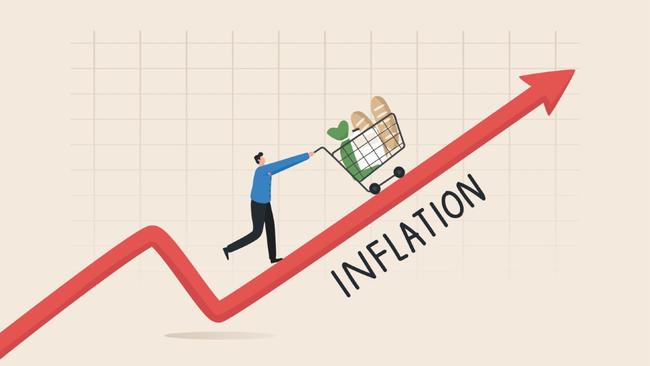
Stubborn inflation is emerging as one of the toughest challenges for the new government, with price pressures refusing to ease despite more than a year of contractionary monetary policy.
After dipping to 8.19 per cent in October, point-to-point inflation began rising again in November and has remained entrenched in the 8–9 per cent range. It has not fallen below 8 per cent in the past 18 months.
Latest data from the Bangladesh Bureau of Statistics show food inflation climbed to 8.29 per cent in January from 7.71 per cent a month earlier, driving up the overall cost of living. Non-food inflation edged down slightly to 8.81 per cent.
Rate hikes, little relief
Following the July 2024 political changeover, Bangladesh Bank began tightening monetary policy. The repo rate was raised from 8.50 per cent to 9.00 per cent in August 2024, then to 9.5 per cent in September and 10 per cent in October. The policy rate has since been held at 10 per cent.
Governor Dr Ahsan H. Mansur has said the tight stance will continue until inflation falls below 7 per cent.
Yet economists argue that higher interest rates alone have failed to cool the market.
Dr M. Masrur Reaz questioned the consistency of the approach. “On the one hand, the central bank has boosted the policy rate. On the other hand, it is injecting high-powered money. Then, how is it a tight monetary policy?” he said.
Supply bottlenecks, fiscal strain
Analysts say inflation is being fuelled by supply-chain inefficiencies, market manipulation by wholesale syndicates and the lingering impact of earlier currency depreciation, which has raised the cost of imported raw materials.
They suggest improved supply management could be more effective in containing the consumer price index and easing pressure on households.
At the same time, heavy government borrowing from banks to finance the budget deficit is crowding out private-sector credit, complicating the policy mix.
The new cabinet, led on the economic front by Finance and Planning Minister Amir Khasru Mahmud Chowdhury and State Minister Zonayed Saki, faces what economists describe as a daunting landscape of sluggish investment and shrinking fiscal space.
Regional contrast
Bangladesh now stands out in South Asia for persistently high inflation. While Pakistan’s inflation remains elevated at 9.64 per cent, India’s has stabilised between roughly 2.7 and 3.65 per cent. Sri Lanka has brought inflation down to around 1.5 per cent after peaking above 50 per cent in 2022, while the Maldives and Bhutan are maintaining rates near 1–2 per cent.
Market reality
On the ground, consumers continue to feel the strain. At Karwan Bazar in Dhaka, green chillies are selling for Tk 240 per kg, lemons for Tk 25 apiece and broiler chicken for Tk 200 per kg — prices that erode the purchasing power of low-income families.
With monetary tightening yet to deliver visible relief, inflation control is shaping up as the defining economic test for the government’s first six months in office.