
Written by The Banking Post
The Dhaka Stock Exchange (DSE) has unveiled a reform agenda focused on AI-based market surveillance, SME listings, and new product development to restore investor confidence and revitalise the capital market.
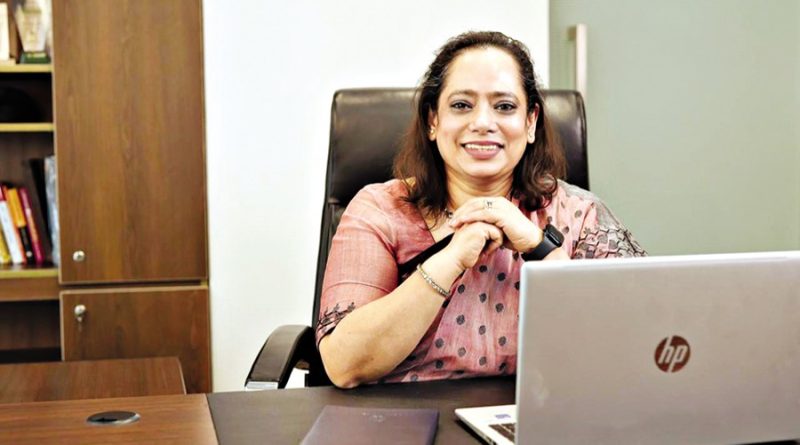
In her first media interaction, DSE Managing Director Nuzhat Anwar outlined plans to modernise the secondary market, tackle manipulation, and broaden investment opportunities.
The DSE chief said the exchange plans to introduce artificial intelligence-driven surveillance to detect abnormal trading patterns and raise instant alerts, replacing the current system that relies heavily on manual monitoring.
“As part of strengthening vigilance, the DSE will move towards AI-based surveillance that will instantly raise red flags in response to unusual trading activities,” she said.
The bourse is also working with the Bangladesh Securities and Exchange Commission (BSEC) to speed up approvals for investigations into brokerage firms. Currently, it can take two to three weeks to obtain permission, often allowing time for irregularities to go unchecked.
Bringing small and medium enterprises (SMEs) to the market is another key priority. Nuzhat said many SMEs remain reluctant to list due to limited market knowledge and high listing costs.
“That’s why these companies need additional financial support and training,” she said, adding that discussions are underway with development partners such as the World Bank and the Asian Development Bank to arrange grants for SME capacity building.
The DSE has also stepped up preparations to support initial public offerings (IPOs) under revised public issue rules introduced last December. The exchange is now engaging potential listing candidates and strengthening internal capacity to process applications.
Previously, IPO approvals could take more than a year, delaying project financing. Under the revised rules, IPO proposals seeking higher premiums will now be decided within 40 to 53 days, she said.
Alongside new listings, the DSE also plans to delist non-operational companies and attract more foreign investment by simplifying regulations and improving market operations.
A key long-term goal is to upgrade the market from frontier to emerging status. To this end, the exchange has held discussions with global index provider FTSE and plans to form a working group involving the central bank, the securities regulator, and the revenue authorities to address barriers.
Procedural bottlenecks remain a challenge. While trades in ‘A’ category stocks settle within two days, it can take up to nine days for foreign investors to repatriate funds — an issue the DSE wants resolved.
The exchange is also seeking support from the revenue authorities to address tax-related constraints and improve the investment climate.
Financial sustainability is another concern. The DSE’s profit has declined steadily from Tk 1.24 billion in FY22 to Tk 312 million in FY25.
Despite this, the exchange has invested Tk 2.9 billion in a new matching engine from Nasdaq to support future expansion and is exploring new revenue streams. Proposals include allowing trading on record dates and introducing share netting.
“We need quality securities and new products in the market. Our five-year roadmap includes cost-effective strategies to strengthen the exchange’s profitability,” Nuzhat said.