
Written by The Banking Post
Bangladesh Bank has launched a massive Tk 600 billion stimulus package aimed at reviving private-sector economic activity, reopening struggling industries and generating employment for more than 2.5 million people.
The package, unveiled on Saturday, is part of the new government’s broader economic recovery agenda amid slowing growth, rising stress in the banking sector and weak industrial activity.
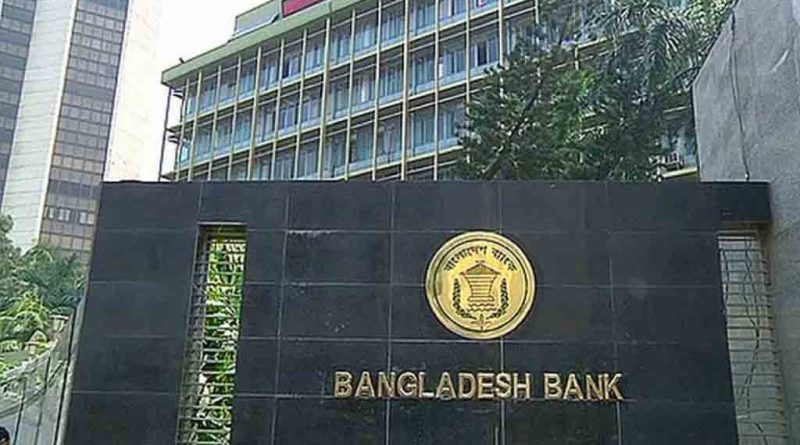
Bangladesh Bank Governor Md Mostaqur Rahman announced the package at a press conference at the central bank headquarters in Dhaka.
The stimulus programme consists of two components — a Tk 410 billion refinancing fund sourced from banks with excess liquidity and a Tk 190 billion support fund financed from Bangladesh Bank’s own resources with government guarantee.
Under the refinancing scheme, banks will place long-term deposits of at least three years with the central bank at a 10 per cent interest rate.
Of the Tk 410 billion refinancing allocation, Tk 200 billion has been earmarked for closed or struggling industrial and service-sector enterprises, Tk 100 billion for agriculture and rural economic activities, and Tk 50 billion for cottage, micro, small and medium enterprises (CMSMEs).
Another Tk 30 billion has been allocated for export diversification, while Tk 30 billion will support development of the northern region as an agricultural hub.
The separate Tk 190 billion support package includes Tk 50 billion for pre-shipment export credit refinance and another Tk 50 billion for cottage, micro and small entrepreneurs.
In addition, Tk 20 billion each has been allocated for leather and leather goods, and frozen fish and fish exports.
The package also includes dedicated allocations of Tk 10 billion for youth employment, rural economic activities, green investment and overseas employment initiatives. Another Tk 5 billion each has been set aside for startups and the creative economy.
The governor said Bangladesh’s economic growth has weakened steadily over the past three years due to mounting stress in the banking and industrial sectors.
According to him, GDP growth declined from 5.8 per cent in FY23 to 4.2 per cent in FY24 and may fall further to around 3.7 per cent in FY25.
He said sectors including readymade garments, textiles, steel, ceramics, information technology and manufacturing have suffered setbacks from persistent economic pressures.
He also pointed to rising non-performing loans, money laundering and weakening depositor confidence, adding that high lending rates have discouraged many small and medium entrepreneurs from expanding businesses.
“To address the current challenges and restore economic momentum, the central bank has introduced a special support package,” he said.
Under the package, large industries will receive loans at 7 per cent interest, while rates for smaller borrowers may be slightly higher.
Bangladesh Bank officials said the central bank would collect excess liquidity from banks at 10 per cent interest. Of that cost, the government will bear 6 percentage points as subsidy, while Bangladesh Bank will absorb the remaining 4 percentage points.
Commercial banks will receive the refinance funds at 4 per cent and lend to borrowers at 7 per cent.
The governor said the package would not create additional inflationary pressure as the funds would come from bank liquidity and Bangladesh Bank’s profits rather than fresh money creation.
Bankers, however, expressed caution over implementation risks.
Syed Mahbubur Rahman, managing director and CEO of Mutual Trust Bank, said the initiative was positive but lending to struggling borrowers remained risky from a banking perspective.
He said banks may consider supporting their own distressed clients after proper assessment, but financing borrowers from other banks could be difficult due to lack of information.
He also noted that industries are facing multiple challenges beyond high borrowing costs, including energy shortages, power supply disruptions and infrastructure weaknesses.
“Only low-cost credit will not solve the problem,” he said.