
Written by The Banking Post
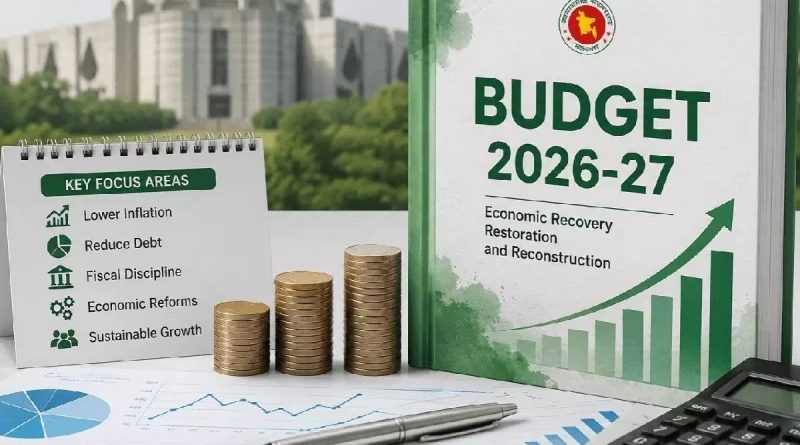
The government has placed macroeconomic stability at the heart of its recovery and reconstruction agenda, unveiling a broad reform strategy aimed at easing inflation, strengthening public finances and reducing reliance on debt-driven growth.
According to the budget document, persistently high inflation over the past few years has significantly weakened household purchasing power and put pressure on the broader economy.
The government said inflation has been fueled not only by global shocks but also by domestic structural weaknesses, including supply chain inefficiencies, market distortions, limited competition and other bottlenecks.
To contain price pressures, the administration plans to strengthen foreign exchange reserves, improve external sector resilience and ensure greater stability in the foreign exchange market.
The budget noted that Bangladesh’s import-dependent economy remains highly vulnerable to exchange-rate volatility, with the depreciation of the taka against major foreign currencies contributing significantly to inflation.
The government also pledged closer coordination between fiscal and monetary policy while ensuring adequate credit flow to productive sectors.
Efforts will focus on boosting exports, facilitating remittance inflows and managing non-essential imports prudently to improve the external balance.
Finance ministry officials believe these measures, alongside better expenditure management and fiscal discipline, will help keep the budget deficit within manageable limits, restore market confidence and create a more investment-friendly environment.
A key pillar of the reform agenda is stronger domestic resource mobilisation.
As part of institutional reforms, the government has initiated the separation of tax policy formulation from tax administration, aiming to build a more efficient and transparent revenue system.
Under the new framework, tax policy will be developed through a dedicated mechanism supported by professional expertise, data-driven analysis and stakeholder consultation.
The government has also adopted a medium-term revenue strategy focused on broadening the tax base, improving compliance and modernising tax administration.
Planned reforms include digitising tax registration and return filing, improving VAT administration, strengthening withholding tax compliance and introducing risk-based audit systems.
Taxpayer services will also be expanded and procedures simplified to encourage voluntary compliance.
The budget further announced a comprehensive review of tax exemptions and expenditures to improve transparency and accountability, with future tax incentives subject to stricter scrutiny.
According to the budget document, Bangladesh’s revenue-to-GDP ratio currently stands at around 8 percent, while the tax-to-GDP ratio is approximately 6.8 percent. The government aims to raise these to 11 percent and 9.6 percent, respectively, by FY2030-31.
The budget also highlighted rising concerns over debt sustainability, attributing part of the current pressure to large-scale borrowing for poorly planned projects undertaken during the previous administration.
To address this, the government aims to improve Bangladesh’s debt-risk rating from moderate to low risk through stronger fiscal discipline, higher revenue collection, sustainable budget deficits and improved debt management.
The administration also signaled a clear shift away from a debt-led growth model, emphasizing production, employment generation and private-sector investment as the foundation for long-term economic growth.
“Policies will be pursued to systematically reduce debt dependence and promote investment-led growth as the foundation of sustainable economic progress,” the budget document said.