
Written by The Banking Post
The government has unveiled an ambitious five-year trade and investment strategy aimed at ensuring a smooth transition from least developed country (LDC) status, setting a target to raise per capita income to $5,000 by 2031 through stronger investment, export diversification and sweeping regulatory reforms.
The targets are outlined in the Country Programme Document 2026–2031, prepared by the Ministry of Commerce with financial support from the World Trade Organization (WTO). The programme aligns with the government’s post-LDC transition strategy and seeks to strengthen Bangladesh’s competitiveness as the country prepares to graduate from LDC status.
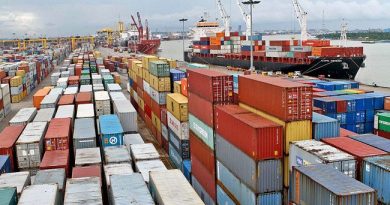
Under the plan, Bangladesh aims to double services exports to $10 billion, increase the number of export products by 60 percent, and raise export-oriented investment from 0.65 percent of GDP to 1 percent over the next five years.
The strategy also focuses on modernising trade infrastructure, attracting more foreign direct investment (FDI), reducing reliance on the ready-made garment sector and improving the overall business environment through comprehensive regulatory reforms.
Initially, the programme identifies 52 projects and outlines the financial and technical support expected from development partners, alongside the roles of government agencies and the private sector.
The initiative comes at a challenging time for the economy, with private sector investment at a record low, persistent energy shortages and high lending rates continuing to discourage new investment.
Mahmud Hasan Khan, president of the Bangladesh Garment Manufacturers and Exporters Association, said achieving the 2031 targets would require a significant increase in public, private and foreign investment.
“Private investment is currently at its lowest level in history. This is due to the gas and electricity crisis, infrastructure bottlenecks and high bank lending rates,” he said.
“If reliable gas and electricity supplies cannot be ensured and lending rates are not brought down to single digits, investment will not increase and these targets will remain beyond reach.”
Speaking at a validation workshop on the programme, Commerce Secretary Md Ataur Rahman Khan stressed that effective implementation would determine the programme’s success.
“Preparing policies and research reports alone will not be enough,” he said.
The programme notes that Bangladesh will gradually lose several LDC-specific trade benefits after graduation, including duty-free and quota-free market access, simplified rules of origin and flexibilities under the WTO’s Agreement on Trade-Related Aspects of Intellectual Property Rights (TRIPS).
Bangladesh is scheduled to graduate from LDC status on November 24, 2026. However, the government has sought a three-year extension of the preparatory period until 2029, citing global economic uncertainty and persistent structural challenges. The proposal has already been endorsed by the UN Committee for Development Policy (CDP) and is awaiting final approval by the UN General Assembly.
To strengthen market access after graduation, the government plans to conclude free trade agreements (FTAs) or economic partnership agreements (EPAs) with nine countries over the next five years. Bangladesh currently has an EPA with Japan, while negotiations are underway with India, China, South Korea, Singapore, Indonesia, the United Arab Emirates, the European Union and other trading partners.
The strategy also aims to improve Bangladesh’s regulatory quality, investment facilitation and trade diversification. It targets raising the country’s Regulatory Quality Index score from 25.7 to 40, improving the Investment Facilitation Index from 65.6 to 80, and increasing the Trade Diversification Index from 95 to 130 by 2031 through greater private-sector participation and higher value-added exports.