
Written by The Banking Post
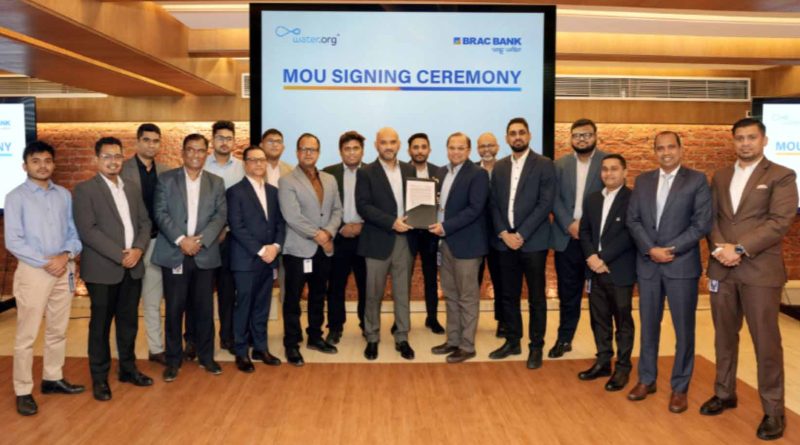
BRAC Bank and Water.org have entered into a partnership to expand access to safe water and sanitation across Bangladesh.
The partnership strengthens BRAC Bank’s Social Bond initiative and marks a significant step in scaling Water, Sanitation and Hygiene (WASH) financing nationwide, according to a media release.
BRAC Bank was the first bank in Bangladesh to introduce dedicated water and sanitation financing through its partnership with Water.org in June 2024.
The bank has expanded access to affordable credit for water and sanitation solutions, enabling small entrepreneurs, microfinance institutions, and rural households to invest in safe drinking water and improved sanitation, generating meaningful public-health benefits in underserved communities.
In addition to expanding WASH access, BRAC Bank’s Social Bond framework is designed to drive broader social development across the country. The bank’s eligible project categories include CMSME financing and employment generation, socioeconomic advancement with a focus on women’s empowerment, food security, affordable housing and essential services such as public health infrastructure.
The Social Bond to be issued by BRAC Bank will mobilise capital to expand access to essential services and strengthen inclusive economic growth. Priority financing will go to CMSMEs, especially women-owned businesses, along with agriculture, healthcare, and WASH-focused initiatives.
The signing ceremony took place at BRAC Bank’s head office on November 17, 2025, attended by Syed Abdul Momen, Additional Managing Director and Head of SME Banking at BRAC Bank, and Sajit Amit, Executive Director, South Asia at Water.org.
Commenting on the partnership, Syed Abdul Momen said: “Our Social Bond will create the scale needed to expand WASH financing and deliver deeper social impact. By pioneering water and sanitation finance with Water.org, we aim to build an inclusive banking model that improves lives and uplifts communities across Bangladesh. This initiative reflects our long-term commitment to sustainability, innovation, and inclusive growth”.