
Written by The Banking Post
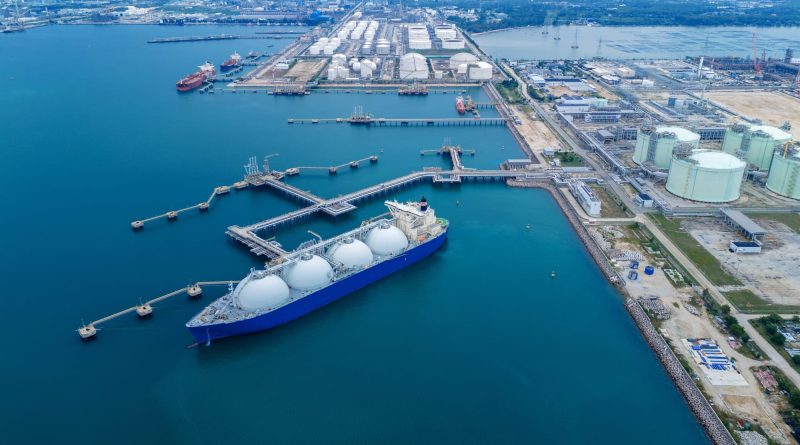
Bangladesh’s interim government spent $3.88 billion to import 109 LNG cargoes in 2025, up from $3.02 billion for 86 cargoes in 2024, as industrial and domestic demand for gas continued to rise.
An official of Petrobangla said the extra $855 million was necessary to meet the growing energy needs. The imported LNG accounted for 350.77 million MMBTu of gas, complementing domestic production, which remains insufficient.
“LNG imports have become essential as domestic gas availability cannot fully meet demand,” said a Rupantaroto Prakritik Gas Company Ltd (RPGCL) official.
Bangladesh began importing LNG in 2018, primarily from Qatar under long-term agreements, and now sources gas through a mix of long-term, short-term, and spot market contracts. Petrobangla director AKM Mizanur Rahman said, “We import LNG regularly to ensure energy security for industries and households.”
Under planning commission projections, the government aims to import 115 LNG cargoes in the 2025–26 fiscal year, with each cargo containing roughly 33.60 lakh MMBTu. LNG under long-term contracts costs about $9.5 per MMBTu, RPGCL officials said.
In 2025, QatarEnergy supplied 40 cargoes totaling 127.39 million MMBTu worth $1.2 billion, while Oman’s OQ Trading delivered 16 long-term cargoes totaling 51.01 million MMBTu for $44.45 million. Spot market procurement added 48 cargoes with 156.36 million MMBTu, sourced from suppliers including PetroChina International, TotalEnergies Gas and Power, and Posco International.
Despite these imports, gas production still falls short of demand. From 8 am on January 5, 2026, to 8 am the next day, total gas production including LNG reached 2,594.7 mmcfd, against a demand of 3,800 mmcfd, Petrobangla said. According to the Integrated Energy and Power Master Plan 2023, daily demand is projected to rise to 6,240 mmcfd by 2030, while domestic production remains constrained.
Historical data shows domestic production has been declining. By the end of 2023, Bangladesh produced 2.08 billion cubic feet per day, lower than the 2012 average of 2.2 billion cubic feet per day, highlighting the growing reliance on LNG imports.
Petrobangla and RPGCL officials said recent deals, including one with US-based Excelerate Energy, aim to diversify LNG sources. Global price fluctuations have also affected costs: the Russia-Ukraine war drove LNG prices up to $18.43 per MMBTu in 2022, dropping to $12.84 in 2024 and $11.02 by November 2025.
With domestic supply unable to meet industrial and household demand, LNG imports remain critical to securing Bangladesh’s energy future.