
Written by The Banking Post
Stocks extended their slide on Sunday, with the benchmark index of the Dhaka Stock Exchange dropping to a one-month low as geopolitical tensions in the Middle East continued to rattle investor sentiment.
The DSEX plunged 107 points, or 2.05 per cent, to close at 5,112—its lowest level since early March. Since the conflict began in late February, the index has fallen 488 points, marking a sharp 9.7 per cent decline. Market capitalisation has also shrunk by Tk 376 billion over the same period.
The downturn reflects growing investor anxiety over the economic fallout of the ongoing conflict, particularly the risks of fuel shortages, rising inflation, and disruptions in power supply. With oil prices surging globally, concerns are intensifying for import-dependent economies like Bangladesh.
Trading sentiment remained weak throughout the session, with most investors opting to stay on the sidelines. “Investors are closely watching developments, as there are no clear signs of de-escalation,” said a market insider.
The DS30 index, which tracks blue-chip stocks, fell 35 points to 1,945, while the Shariah-based DSES index dropped 18 points to 1,041.
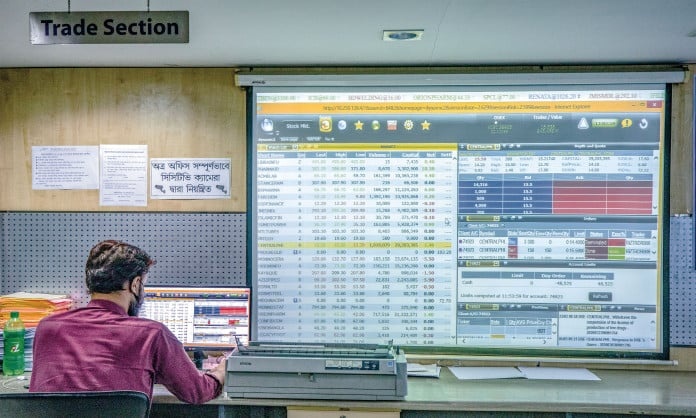
The decline was broad-based, with 354 of the 390 traded stocks closing lower. Only 25 advanced, while 11 remained unchanged. Major sectors—including banking, engineering, non-bank financial institutions, telecom and power—posted losses, with banking leading the correction.
Blue-chip stocks such as BRAC Bank, City Bank, Square Pharmaceuticals, Pubali Bank and LafargeHolcim Bangladesh played a key role in dragging down the index.
Liquidity also weakened, with turnover falling 18 per cent to Tk 5.12 billion. However, the pharmaceutical sector saw relatively higher activity, accounting for 15.5 per cent of total turnover.
The spillover effects of the crisis are becoming more visible. Oil prices have surged to around $115 per barrel, driven in part by disruptions in key shipping routes like the Strait of Hormuz. Analysts warn that prolonged instability could also affect remittance inflows, a critical support for the country’s balance of payments.
“Lingering economic uncertainties and the persistent Middle East crisis overshadowed any temporary relief in investor sentiment,” said a brokerage analysis, noting the absence of strong catalysts to revive the market.
The Chittagong Stock Exchange also mirrored the downturn, with its key indices posting significant losses, underscoring the widespread pressure across the capital market.