
Written by The Banking Post
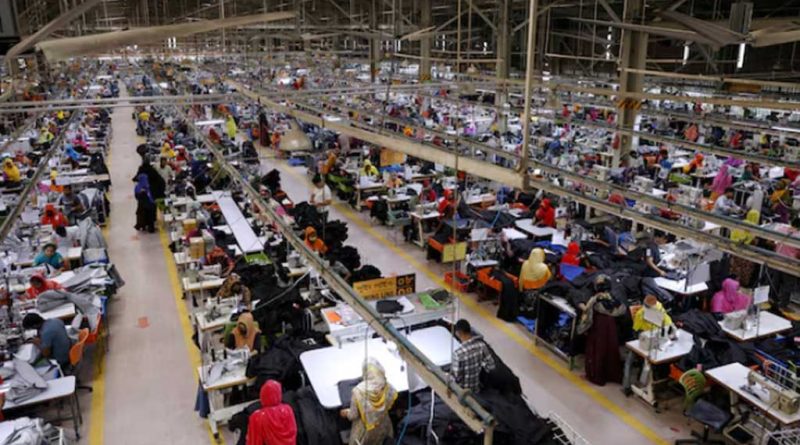
Bangladesh’s readymade garment exports may struggle to retain duty-free access to the European Union after its graduation from least developed country (LDC) status and the transition period ending in 2029, raising concerns for the country’s largest export sector.
Once the transition ends, Bangladesh will lose access to the EU’s Everything But Arms (EBA) facility and become eligible to apply for the GSP-plus scheme. However, under the EU’s revised Generalised Scheme of Preferences (GSP), duty-free benefits for Bangladeshi garments are far from guaranteed, according to trade officials and analysts.
The European Commission, Council and Parliament agreed on December 1 to revise the GSP framework, effective from January 1, 2027 for a 10-year period. The new regime introduces lower product-graduation thresholds, a move that could significantly affect major exporters like Bangladesh.
Under the proposed rules, the product-specific threshold for textiles and garments—Bangladesh’s core export to the EU—will fall to 37 per cent from the current 47.2 per cent once the transition period ends after 2029.
EU Ambassador to Bangladesh Michael Miller said EBA beneficiaries such as Bangladesh are not subject to these thresholds while they retain LDC status. “The threshold applies only to standard GSP and GSP+ beneficiary countries,” he said.
He added that Bangladesh will continue to enjoy EBA benefits during its LDC period and for a further three-year transition after graduation. During this time, the EU will provide capacity-building support to help Bangladesh meet GSP-plus requirements.
Explaining the safeguard mechanism, Miller said it is not new and has never been activated so far, as thresholds were not breached. Automatic safeguards would apply only if a beneficiary’s exports exceed 37 per cent of EU imports of a product from all GSP beneficiaries, or if its share rises above 6 per cent of total EU imports from all countries. “At this point in time, it is not possible to foresee what the share of Bangladesh’s exports will be when Bangladesh eventually graduates from the EBA arrangement,” he said.
Trade economist MA Razzaque warned that the risk is real. He said safeguards can be triggered if a country exceeds either threshold for three consecutive years. Bangladesh’s current share stands at around 24 per cent of total EU imports and about 47 per cent of GSP textile imports, levels that could jeopardise duty-free access after graduation.
The EU is Bangladesh’s largest export destination, with garment shipments rising sharply over the past decade, largely due to duty-free access. Eurostat data show Bangladesh’s RMG exports to the bloc grew from €11.54 billion in 2015 to €18.28 billion in 2024, an increase of more than 58 per cent.
Competition is intensifying as rival exporters such as China, Vietnam, India and Cambodia shift focus to the EU market amid higher US tariffs. After 2029, Bangladeshi garments could face a 12 per cent duty in the EU, while Vietnam’s duties will gradually fall to zero under its free-trade agreement with the bloc.
Fazlee Shamim Ehsan of the Bangladesh Knitwear Manufacturers and Exporters Association said the uneven playing field is a major concern. He called for strong diplomatic efforts to ease safeguard clauses and extend the transition period to six years.
At the same time, he said the industry must prepare for the post-duty-free era by improving efficiency and productivity, diversifying products and markets, and reducing wastage to remain competitive in the EU market.