
Written by The Banking Post
Bangladesh’s export earnings fell sharply in March, extending a prolonged downturn driven largely by weakness in the garment sector and soft global demand.
Data from the Export Promotion Bureau shows exports dropped 18.07 per cent year-on-year to $3.48 billion in March 2026, down from $4.28 billion a year earlier.
The decline marks the eighth consecutive month of negative growth, with the slide beginning in August last year and persisting through subsequent months.
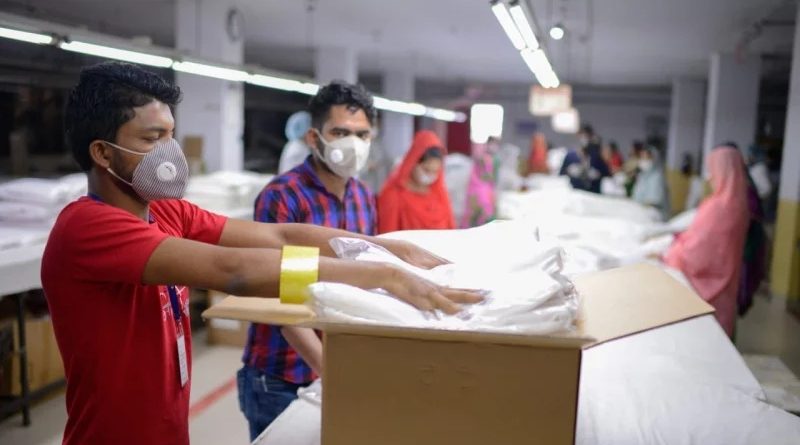
The apparel sector—Bangladesh’s main export driver—led the fall. Readymade garment shipments brought in $2.78 billion in March, registering a steep 19.35 per cent contraction from $3.44 billion in the same month of 2025.
Overall export performance for the first nine months of FY2025-26 also remained weak. Total earnings stood at $35.38 billion during July–March, down 4.85 per cent from $37.19 billion in the corresponding period last year.
Despite the decline, garments continued to dominate exports, contributing $28.57 billion, though still down 5.51 per cent year-on-year. Within the segment, knitwear exports fell 6.42 per cent, while woven garments dropped 4.48 per cent.
Exporters point to multiple external pressures behind the downturn, including weakening global demand, shifting trade dynamics, and increased competition. They also cite higher production costs and geopolitical tensions as key challenges.
“The Middle East war is deteriorating the situation further,” said a sector leader, expressing concern over slowing work orders from international buyers.
Another industry representative warned that ongoing global conflicts and tariff changes are reshaping demand patterns, adding that the industry is yet to recover from earlier shocks.
The EPB attributed the decline to a mix of global factors, including geopolitical tensions, energy market volatility, and inflationary pressures in key export destinations such as the United States and Europe, which have weakened purchasing power and led to order cancellations.
Some sectors, however, showed resilience. Leather and leather products grew 3.15 per cent, while frozen and live fish exports rose 3.71 per cent. Pharmaceutical shipments also posted modest growth of 3.14 per cent.
Still, with major export markets under pressure and order flows uncertain, the outlook for the coming months remains challenging.