
Written by The Banking Post
The government has ruled out printing money to finance its budget, instead prioritising investment-led growth and stronger resource mobilisation, Finance Minister Amir Khosru Mahmud Chowdhury said today.
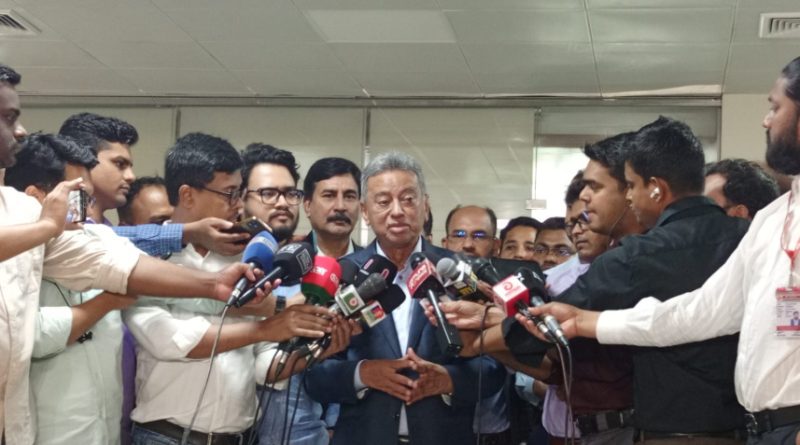
“We do not want to print money,” he told journalists after meeting officials of the National Board of Revenue (NBR). He emphasized that the government aims to shift from a debt-dependent model to an economy capable of generating sustainable growth and employment.
Chowdhury described the current situation as a challenge on three fronts: reviving the struggling economy, fulfilling electoral promises, and coping with rising fuel import costs triggered by the Middle East conflict.
“We have inherited an economy in a very difficult state. First, we have to salvage it. At the same time, we must deliver on the commitments we made to the people,” he said, highlighting the importance of resource mobilisation for stabilisation and future growth.
The minister noted that policy inconsistency has discouraged investors in the past. “Investors come, and then policies change, which sends the wrong message,” he said. Efforts are now underway to attract domestic and foreign capital, with strong interest observed following the elections.
Chowdhury outlined reforms including serious deregulation and restoring discipline in the financial sector and capital market to improve the investment climate.
The upcoming budget will also prioritise marginalised groups, he said, stressing that social protection programmes cannot be indefinitely deferred due to budget constraints.
The government plans to diversify exports, offering incentives to new sectors similar to those for apparel exporters. Meanwhile, Bangladesh’s LDC graduation process continues through the UN, though the minister refrained from definitive comments pending decisions at the UN Economic and Social Council and General Assembly.
The government is also engaging development partners to navigate ongoing economic pressures and strengthen the country’s fiscal position.