
Written by The Banking Post
The interim government has approved plans to establish Bangladesh’s first free trade zone (FTZ) and a dedicated defence industrial park in Chattogram, aiming to accelerate exports, attract foreign investment, and strengthen critical supply chains.
The decisions were taken on Monday at a meeting of the governing board of the Bangladesh Economic Zones Authority (BEZA), chaired by Chief Adviser Muhammad Yunus at the Chief Adviser’s Office in Dhaka.
Under the plan, a 600–650-acre FTZ will be developed in Anwara, near Chattogram. The zone will function as an offshore customs territory, allowing goods to be imported, stored, processed, and re-exported without customs duties.
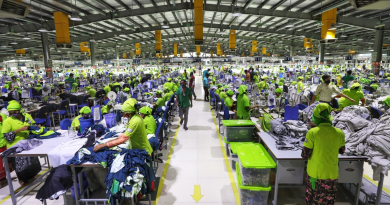
BEZA Executive Chairman Chowdhury Ashik Mahmud Bin Harun said the FTZ would significantly cut time-to-market for export-oriented industries, particularly textiles. Raw materials such as cotton could be stockpiled in the zone and accessed immediately by manufacturers, or redirected to other markets based on demand. He said the model draws inspiration from global hubs such as Dubai’s Jebel Ali Free Zone.
The proposal will now go to the cabinet for final approval. Its implementation will require amendments to existing laws, a process expected to be completed under the next elected government. Officials hope to reach key milestones by the end of the year.
The board also approved Bangladesh’s first defence industrial park, to be set up on about 80 acres in Mirsarai. The site was previously allocated for an Indian economic zone, which was later cancelled.
Ashik Mahmud said the park would enable Bangladesh to enter the growing global defence manufacturing market and strengthen domestic supply chains for military equipment. He noted that recent global conflicts have exposed vulnerabilities in sourcing essential items such as ammunition and vehicle components.
The project will be developed jointly by BEZA, the Armed Forces Division, the Ministry of Defence, and the Chief Adviser’s Office, and will be integrated into the national economic zone master plan.
In another move, the board approved a proposal to convert the struggling Kushtia Sugar Mill into a full-scale industrial park as part of efforts to revive underperforming state-owned assets.
To attract foreign direct investment, the Bangladesh Investment Development Authority has also approved a policy offering cash incentives to non-resident Bangladeshis who facilitate equity investment. Under the scheme, they will receive 1.25 per cent of the investment value as incentive. Ashik Mahmud said this recognises the role of the diaspora, similar to existing remittance incentives but focused on productive investment.
The meeting also unveiled a five-year master plan for Moheshkhali, covering 2025–2030, aimed at transforming the region into a major energy and logistics hub. Key priorities include operationalising the deep-sea port, accelerating LNG and LPG terminal development, and setting up a fish processing hub. The board approved a 137-member organisational structure to oversee project implementation.
Officials said the combined initiatives signal a strategic push to modernise Bangladesh’s industrial and trade infrastructure amid intensifying global competition for investment.