
Written by The Banking Post
Bangladesh’s large-scale manufacturing (LSM) sector shrank sharply in December, reflecting mounting stress on the industrial base amid slowing exports and rising global uncertainties.
According to data from the Bangladesh Bureau of Statistics (BBS), LSM output declined 6.34 per cent year-on-year during the month. The sector, which contributes around 11 per cent to GDP, is considered a key barometer of overall economic activity.
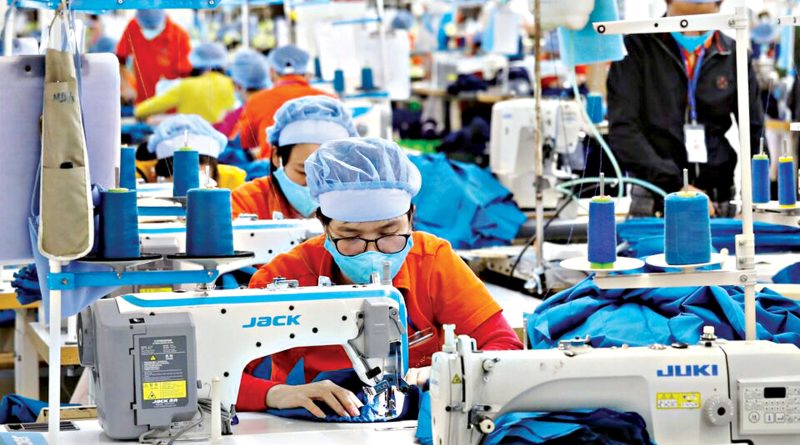
The contraction was largely driven by a slowdown in the apparel industry—the dominant component of the manufacturing index with a weight of about 61 per cent. A downturn in this segment tends to have an outsized impact on overall performance.
The textile sector, the second-largest contributor with over 11 per cent weight, also posted a decline of more than 1.0 per cent, adding to the downward pressure.
The weak industrial output coincided with a notable drop in exports. Outbound shipments fell 14.25 per cent year-on-year to $3.96 billion in December 2025, as global demand softened amid higher production costs and geopolitical tensions.
Of the 23 industrial subsectors tracked, seven recorded negative growth during the month. Some sectors, however, showed resilience. Food manufacturing grew by around 12 per cent, while paper and pharmaceuticals expanded by roughly 10 per cent each. But their relatively small weights limited their ability to offset the broader decline.
Industry leaders point to declining garment orders as a key factor. “We have been facing weak order flows for quite some time,” said a business leader, noting that rising global shipping costs are further squeezing margins as buyers push suppliers to absorb higher logistics expenses.
Economists warn that external risks remain elevated. Ongoing geopolitical tensions, particularly in the Middle East, have disrupted trade routes and driven up freight and input costs.
“The deteriorating global outlook is weighing on Bangladesh’s external trade,” said an economist, adding that higher costs are eroding competitiveness.
He cautioned that since LSM is a proxy for overall economic activity, a prolonged contraction could translate into slower GDP growth in the current fiscal year.