
Written by The Banking Post
The government is moving to amend key provisions of the Money Laundering Prevention Act, 2012 to speed up efforts to recover money and assets siphoned off abroad, even as Bangladesh Bank cautioned that bringing back laundered funds could take four to five years.
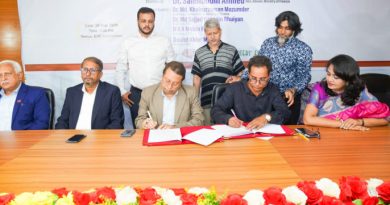
The decision was taken at a meeting of the National Coordination Committee on combating money laundering and terrorist financing, chaired by Finance Adviser Salehuddin Ahmed. The meeting reviewed progress on asset recovery and the status of high-profile investigations.
Officials said a joint investigation team is currently probing 11 priority cases involving influential individuals accused of laundering money overseas. So far, 104 cases have been filed based on the priority list, with charge sheets submitted in 14 cases and court verdicts delivered in four.
According to the Ministry of Finance, movable and immovable assets worth Tk 661 billion have been attached and frozen under these cases—Tk 556 billion inside the country and Tk 105 billion abroad. In addition, 21 Mutual Legal Assistance Requests (MLARs) have been sent to relevant countries for the priority cases.
The committee directed concerned agencies to expedite charge sheets, send MLARs without delay and take steps to ensure faster disposal of cases.
The meeting also discussed Bangladesh’s upcoming fourth-round mutual evaluation by the Asia Pacific Group on Money Laundering, scheduled for 2027–28. Terming the evaluation critical, the committee instructed all ministries and agencies to strengthen preparations to meet international anti-money laundering and counter-terrorism financing standards.
After the meeting, Bangladesh Bank Governor Ahsan H Mansur said asset recovery from abroad is inherently slow. “At least four to five years will be needed to bring back laundered money from abroad,” he said, citing complex legal processes across jurisdictions.
He said numerous cases have already been filed against individuals and institutions, expressing hope that some funds could be recovered sooner. Referring to a case involving former land minister Saifuzzaman Chowdhury in London, the governor said some money could come back if the matter is resolved. “But when it will come, whether before February or later, I don’t know,” he added.
He noted that Saifuzzaman did not contest the case in London, effectively accepting defeat, and said Islami Bank and another bank have already staked claims on any recoverable funds. “They may make appeal… this is a long process. But we think Saifuzzaman may not file any appeal, because he did not contest,” he said.
On allegations against S Alam Group chairman Saiful Alam Masud, the governor said he has sought arbitration in Washington against Bangladesh authorities. “We will contest it on the ground that he is a Bangladeshi citizen and it is proved by Bangladeshi court and we have adequate proof of it,” he said, rejecting claims that Masud is a Singaporean national.
Turning to depositors’ funds, Mansur said the government is developing a computerised system to transfer money of the newly formed Sammilito Islamic Bank to customers’ accounts. The system may take about two weeks to complete.
He said Sammilito Islamic Bank has already opened an account with Bangladesh Bank, holding around Tk 200 billion from the government budget. “We want a chaos-free disbursement of the depositors’ money. But it will take some more time,” he said.