


Written by The Banking Post
Revenue collection growth has exceeded 12% following a series of reforms in the tax administration, Finance and Planning Adviser Prof. Rashed Al Mahmud Titumir has said.
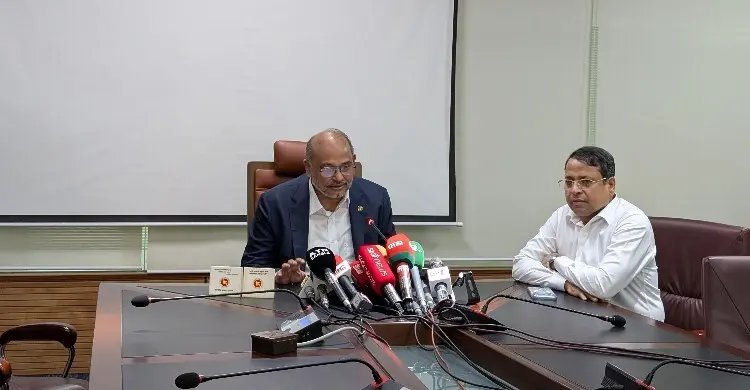
Speaking to journalists at the National Board of Revenue (NBR) headquarters on Tuesday, he attributed the improvement to the formation of separate task forces for the income tax, customs and value-added tax (VAT) wings.
According to the adviser, revenue growth stood at 2.5% in FY2024-25, but increased to 12.03% after the current government introduced wing-specific reform initiatives.
“The progress indicates that the government’s reform programme is delivering results,” he said.
Titumir noted that customs houses recorded the highest level of duty collection in Bangladesh’s history toward the end of the last fiscal year. Income tax collection has also shown notable improvement, he added.
Targeting a higher tax-to-GDP ratio
The adviser said the government inherited a fragile economy with a tax-to-GDP ratio of only 6.67%, one of the lowest in South Asia and globally. The government aims to raise the ratio to 10% by 2030.
He stressed that higher domestic revenue mobilisation is essential to increase spending on key social sectors such as education and healthcare. The government plans to raise expenditure in both sectors to 5% of GDP, a goal that will require significantly stronger revenue collection.
Banking sector recovery and economic challenges
Responding to questions about revenue shortfalls and recent negative VAT growth, Titumir said the government had inherited an economy weakened by structural problems.
He claimed that extensive irregularities in the banking sector had created substantial financial stress, estimating that around $40 billion would be required to restore the sector fully.
To stimulate economic activity, the government has taken measures to boost investment, public expenditure, consumption and export earnings, he said. Bangladesh Bank has also introduced financing packages to increase credit flows to the private sector, with part of the allocated funds already disbursed.
The adviser added that surveys and verification activities are underway to identify beneficiaries for the Family Card programme, aimed at supporting people who have fallen below the poverty line. Increased household consumption and stronger remittance inflows, he said, would help support economic growth.
Tax administration reforms underway
Titumir rejected allegations that revenue collection data are not being disclosed, saying the NBR is working to improve its data management system. While revenue information is available daily through the iBAS++ platform, data reconciliation takes time. Regular publication of revenue collection data is expected to begin from December, he added.
On VAT compliance, he said the NBR has introduced a risk-based audit system, under which businesses are selected for audits based on specific risk indicators. Efforts are also underway to resolve around 29,000 pending tax-related cases, involving a significant amount of blocked revenue.
The government is also considering a major restructuring of the tax administration. Based on stakeholder consultations, a committee has recommended creating two separate entities for revenue policy and revenue collection. The committee has submitted its report, and implementation is expected to move forward soon.
Focus on broadening the tax base
The adviser said the government’s objective is to build a fairer tax system without increasing tax rates. Instead, reforms will focus on curbing tax evasion, tax fraud and unjustified tax exemptions while strengthening institutions to improve revenue mobilisation.
He also pointed to the country’s rising debt burden, claiming that public debt increased by more than 300% over the past decade. Bangladesh’s external debt servicing costs have reached $4.49 billion, and could rise to $7.6 billion by 2030, according to some estimates.
On the banking sector, he said forensic audits found the non-performing loan ratio to be significantly higher than previously reported, highlighting deep-rooted challenges that have affected the broader economy.
The government, he said, is pursuing reforms aimed at restoring economic stability, strengthening public finances and improving long-term revenue performance.


