
Written by The Banking Post
Capital market stakeholders have called for sweeping tax and policy reforms in the upcoming budget to deepen Bangladesh’s stock market, attract investors, and expand the pool of listed companies.
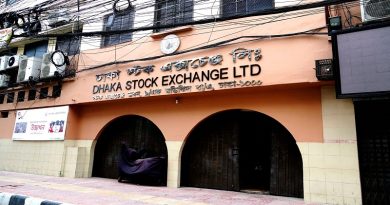
At a pre-budget meeting with the revenue authority, leaders from merchant banks, stock exchanges, and brokerage firms submitted a set of proposals, highlighting that the market remains significantly underdeveloped compared to regional peers. Market capitalisation currently stands at just 15–18 per cent of GDP, far below the 40–80 per cent seen in comparable Asian economies.
A key recommendation is to bring large, profitable companies into the market. Stakeholders said many multinational firms, conglomerate subsidiaries, and infrastructure companies operate successfully but remain unlisted, limiting investment opportunities. They proposed mandatory listing for firms exceeding specific thresholds in revenue, capital, or borrowing, with a 3–5 per cent surcharge for non-compliance.
To encourage listings, they also suggested widening the tax gap between listed and non-listed firms. Corporate tax for listed companies could be reduced to 18 per cent, and to 15 per cent for newly listed firms for an initial five-year period. “This policy will provide clear financial incentives for companies to list on the stock exchange,” said a market participant.
The proposals come amid a prolonged slowdown in new listings, with no initial public offerings entering the market in the past two years.
The country’s main bourse also pushed for tax relief to attract investors, including a five-year exemption from capital gains tax for non-resident investors to help reverse foreign fund outflows. It further proposed lowering capital gains tax for individual investors and offering tax holidays for small and medium-sized enterprises.
Brokerage firms raised concerns over double taxation on dividend income, which can push the effective tax rate above 40 per cent. They urged authorities to treat tax deducted at source as the final liability to simplify the system and encourage dividend-based investment.
Bankers, meanwhile, called for removing certain taxes that hinder capital formation, including a levy on stock dividends and retained earnings. They also proposed making capital gains from government securities tax-free to support the bond market.
The Chittagong bourse recommended a five-year tax holiday for a proposed commodity exchange and lower taxes on technology and software imports to reduce operational costs.
Responding to the proposals, the revenue authority acknowledged the concerns but stressed that tax incentives alone would not be enough. Restoring investor confidence through stronger governance and market discipline remains critical for sustainable development of the capital market.