
Written by The Banking Post
Primary textile millers have raised alarm over a proposed budget measure that would remove the minimum value-addition requirement for exports made using duty-free imported raw materials, warning it could undermine domestic industries and increase reliance on imports.
The concern centres on the proposed FY2026-27 budget plan to abolish the existing 30 percent value-addition condition for export goods produced from duty-free raw materials imported against bank guarantees without a bond licence. The proposal also seeks to extend this facility to 10 additional sectors, on top of the existing eight, including garments, leather goods and plastics.
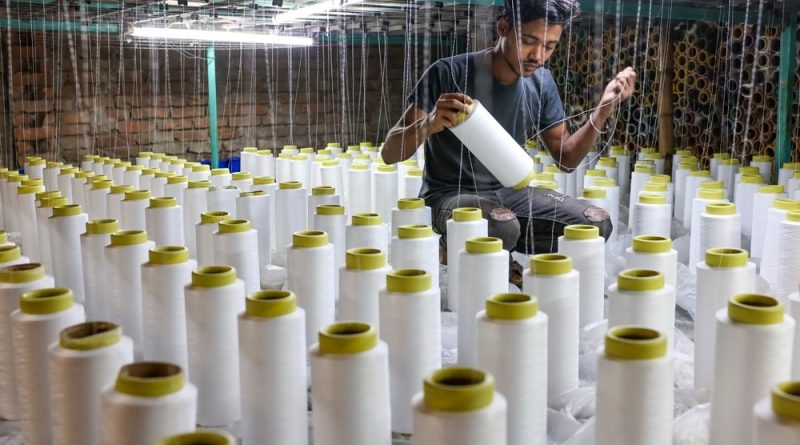
While the government says the move is intended to diversify exports and support export-oriented industries, textile millers argue it could severely damage the country’s backward-linkage industries, especially spinning, weaving and textile manufacturing units.
They fear the change would allow large volumes of duty-free imported raw materials into the market, making it difficult for local producers to compete and survive.
Industry leaders say the policy may also conflict with existing export-import rules that require minimum value addition, and could complicate Bangladesh’s post-LDC trade negotiations.
Md Salehud Zaman Khan, Managing Director of NZ Tex Group and former vice-president of the Bangladesh Textile Mills Association (BTMA), called the proposal a “suicidal decision” if implemented without safeguards.
He warned that exporters could potentially import raw materials worth Tk 100 and re-export finished goods worth only Tk 101 in the absence of any value-addition requirement.
“There must be a minimum value-addition threshold. Whether it is 25 percent or 30 percent can be debated, but it cannot be removed entirely,” he said.
He also cautioned that Bangladesh could risk becoming a transit hub for foreign goods, where products from other countries may be minimally processed and rebranded as local exports.
“After LDC graduation, Bangladesh will lose automatic duty-free access in major markets. To retain preferential access, we need higher value addition, not less,” he added.
Industry sources noted that Bangladesh is already in talks with major trade partners, including the European Union, the United Kingdom and Japan, on free trade agreements and partnership deals, where value addition and rules of origin will play a key role in determining market access.
They added that future trade preferences, including the EU’s GSP+ scheme, may require at least 40 percent value addition, while some markets such as Australia and Canada already demand up to 50 percent.
Khorshed Alam, Chairman of Little Star Spinning Mills Ltd, said the proposed change would worsen existing pressure on local mills, which are already struggling due to imported yarn and fabric entering through bonded facilities.
He claimed domestic spinning mills, once supplying around $12 billion worth of inputs annually, are now down to $7.5–8 billion, with the rest of the demand being met by imports.
“If the value-addition rule is removed, many mills will not survive,” he warned.
Policy Exchange Bangladesh Chairman M Masrur Reaz also described the proposal as a “step in the wrong direction,” arguing that Bangladesh should instead strengthen its local industrial base ahead of LDC graduation.
He said greater reliance on imported inputs could weaken long-term export competitiveness.
BTMA President Showkat Aziz Russell echoed similar concerns, urging the government to retain the existing requirement.
He warned that removing the 30 percent value-addition rule could create scope for misuse of the duty-free import system and further pressure domestic textile manufacturers.